Youth Community Outreach
August 2026
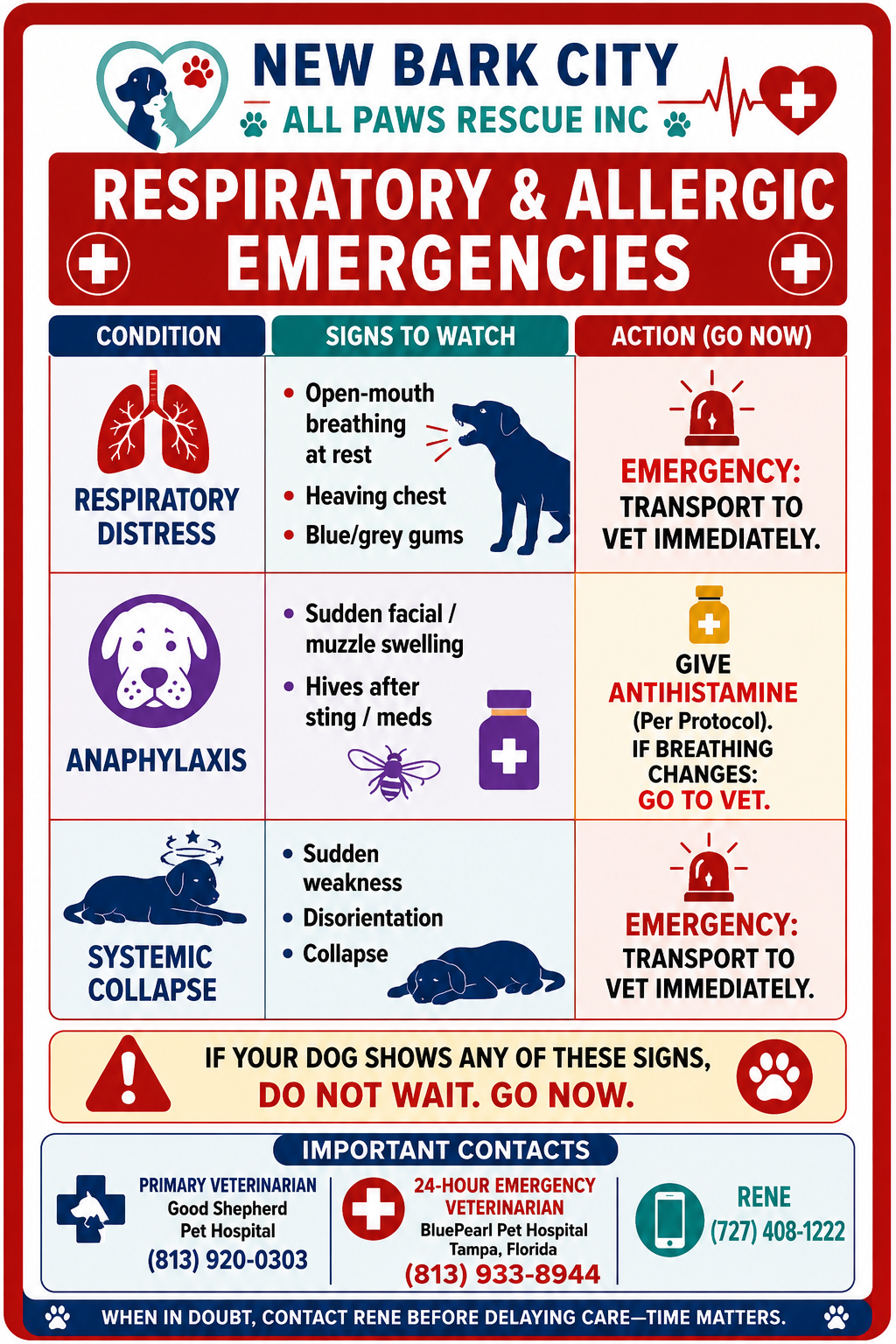
Topic: Respiratory & Allergic Emergency Protocols
The Lesson: Spotting the Critical Signs of Distress
When an animal experiences a sudden medical crisis, knowing how to evaluate breathing, allergic reactions, and physical stability is a vital part of emergency care. At New Bark City, we teach our students how to recognize the critical boundary between stable monitoring and immediate veterinary intervention.
August Youth Community Outreach Homework Assignment: The "Emergency Response" Essay
To earn community service hours or to join the volunteer crew, please submit a short essay (including an introduction, body paragraphs, and a conclusion) answering the following:
Research: Find a recent report or describe a common household scenario involving a sudden pet emergency, such as severe allergic reactions (anaphylaxis) or acute respiratory distress.
Analysis: Based on your knowledge of emergency protocols, what are the precise steps a caregiver must take when a dog shows signs of systemic collapse or open-mouth breathing at rest, and why is speed critical?
Advocacy: How can you use your understanding of emergency signs to educate others on why waiting or delaying care during a crisis can be life-threatening?
Submission Instructions:
Please email your response to ed@newbarkcity.org.
Include your full name and the subject line: "August 2026 Youth Community Outreach Submission." The "Clinical Compassion" Program
We don't just show kids dogs; we show them responsibility. Our youth community outreach is built on three pillars of education:
Medical Observation: We teach students how to look at a dog like a nurse does. What does their coat say about their nutrition? How do you check for signs of dehydration or infection?
The Reality of "Red-Listed": We have honest conversations about why animals end up on euthanasia lists. We teach the kids that these "hard cases" aren't broken—they are just waiting for a specialized care plan.
The Business of Rescue: We show them the "legwork"—from the Daily Care Logs to the fundraising needed for a single heartworm treatment. We are training the next generation of rescue directors, veterinarians, and compassionate citizens.
July 2026
Topic: Summer Safety Protocols
The Lesson: Advocacy in the Heat
As the temperature climbs, so does the risk to our canine companions. At New Bark City, we prioritize safety by limiting outdoor activity during the hottest months and ensuring our dogs are never left in situations where they cannot cool down. Understanding the science of heatstroke and the legal realities of pet safety is a critical part of being a responsible advocate for animals.
July Homework Assignment: The "Advocate's Response" Essay
To earn community service hours or to join the volunteer crew, please submit a short essay (including an introduction, body paragraphs, and a conclusion) answering the following:
Research: Find a news article or report from this year or last year detailing an incident where a dog was left in a hot car or in dangerous summer conditions.
Analysis: Based on your research, what do you believe is an appropriate consequence for this situation, and why?
Advocacy: How can you use your knowledge of heat-related medical risks to educate others on why it is never safe to leave a dog in these environments, even for a short time?
Submission Instructions:
Please email your response to . ed@newbarkcity.org
Include your full name and the subject line: "July 2026 youth Submission." The "Clinical Compassion" Program
We don't just show kids dogs; we show them responsibility. Our Youth Community outreach is built on three pillars of education:
Medical Observation: We teach students how to look at a dog like a nurse does. What does their coat say about their nutrition? How do you check for signs of dehydration or infection?
The Reality of "Red-Listed": We have honest conversations about why animals end up on euthanasia lists. We teach the kids that these "hard cases" aren't broken—they are just waiting for a specialized care plan.
The Business of Rescue: We show them the "legwork"—from the Daily Care Logs to the fundraising needed for a single heartworm treatment. We are training the next generation of rescue directors, veterinarians, and compassionate citizens.
June 2026
Topic: Recognizing and Responding to FAS (Fear, Anxiety, and Stress)
The Lesson: Understanding the "Stop" Level
In our rescue work, we use the FAS scale to identify when an animal is in distress. Dogs experiencing high FAS (Level 4–5) are in survival mode; they are not "bad" dogs, but they are overwhelmed. When a dog is at this level, they require a calm, quiet environment and a very slow, patient approach to help them decompress.
June Youth outreach Homework Assignment: The "Real-World Response" Essay
To earn community service hours or to join the volunteer crew, please submit a short essay (including an introduction, body paragraphs, and a conclusion) answering the following:
Knowing what you have learned about high FAS, describe how you would respond if you encountered a dog displaying these signs of extreme stress. What would you do to ensure the dog's safety and help them decompress, rather than forcing an interaction?
Submission Instructions:
Please email your response to Ed@newbarkcity.org.
Include your full name and the subject line: "June 2026 youth Submission."
Upon review, a representative from New Bark City will sign off on your community service hours Current Youth Projects: Spring 2026
May Project: The Science of Silent Language
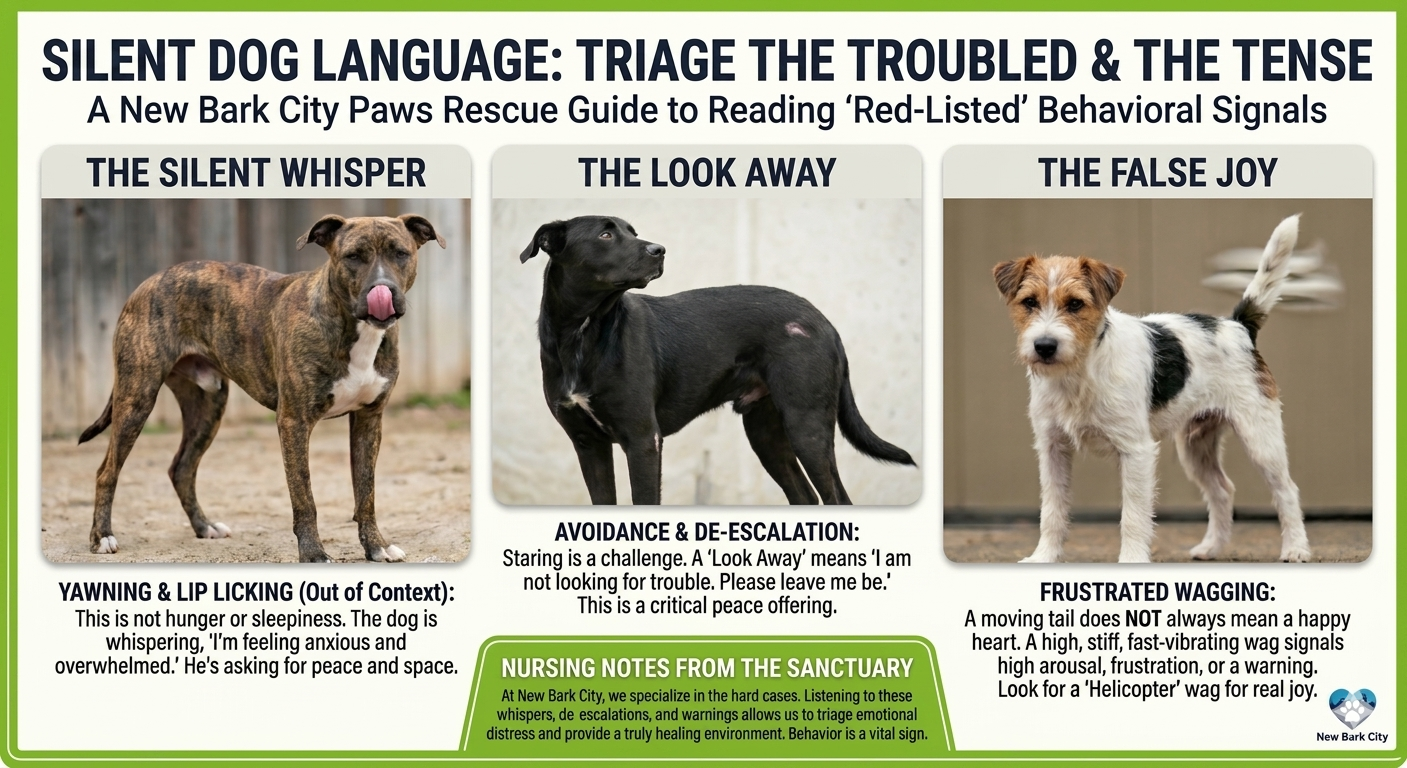
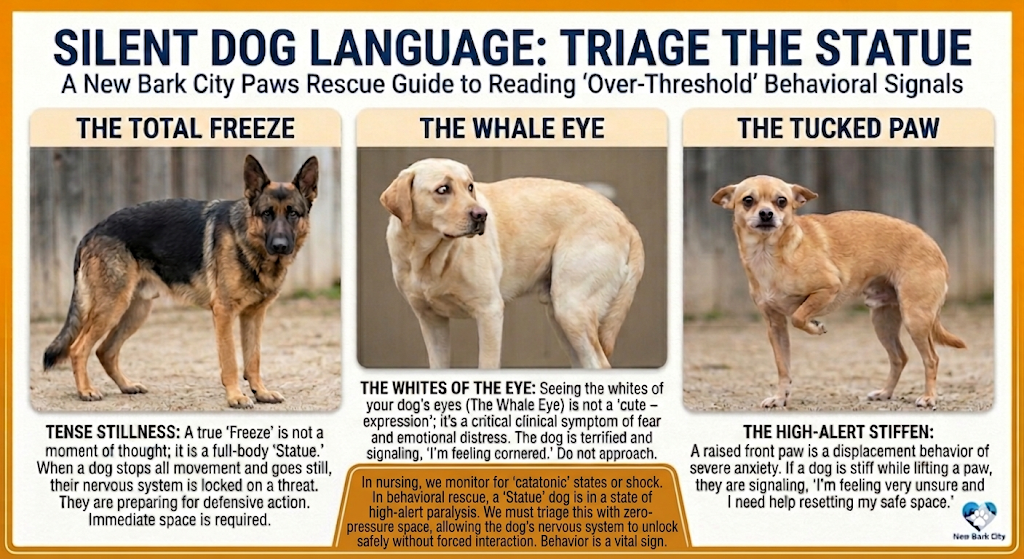
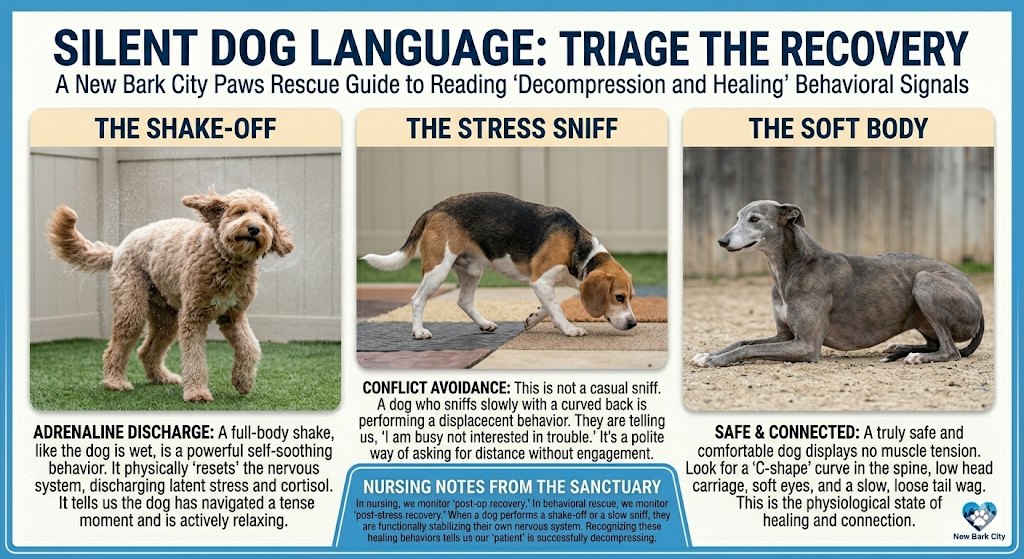
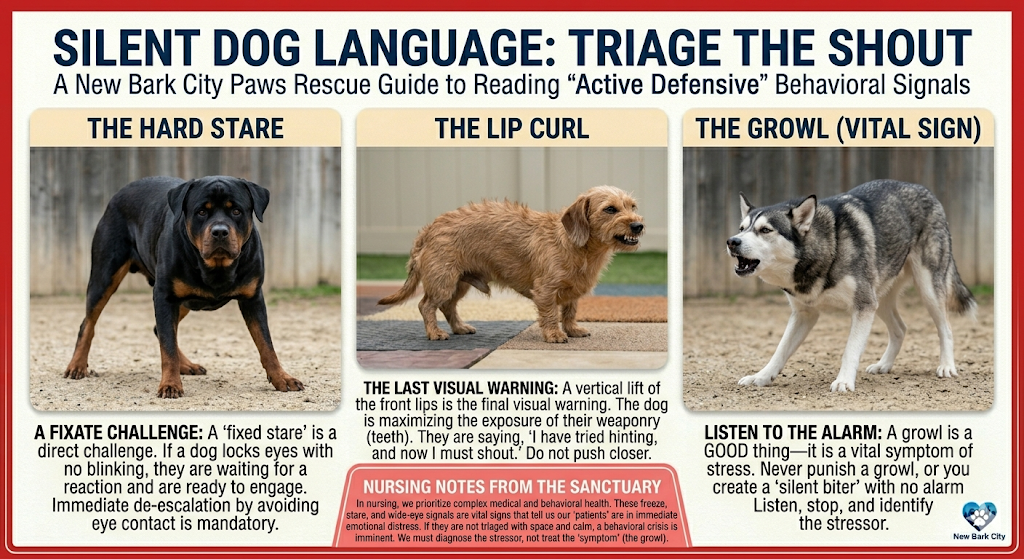
This month, our 4-H youth are diving into Ethology—the study of animal behavior. They are learning that a dog’s "voice" is often silent, and that reading these subtle signals is the key to providing a safe, low-stress environment for high-acuity rescue cases.
Hands-on Skill: Students are using our "Silent Dog Language" Triage Guide to observe dogs in real-time. They are learning to identify "peace offerings" like the Look Away and distinguishing them from high-arousal signals like the Stiff-Vibrating Wag.
The "Nurse's Eye": Youth are practicing how to triage emotional distress. By recognizing "The Silent Whisper" (lip licking and yawning) before it escalates, they are learning how to prevent behavioral crises through environmental management.
Updated Nurse's Tip for Youth Community Outreach Mentors (May Addition)
"I always tell my students: Behavior is a vital sign. Just like a heart rate or a temperature, a dog's body language tells us exactly how their nervous system is coping with their recovery. Teaching kids to respect the 'Silent Whisper' ensures they become handlers who lead with empathy and clinical precision."
April Project: Digestive Health & Hydration Science
This month, our youth community outreach are exploring the critical link between hydration and recovery in medical-needs dogs. They are learning how to monitor GI health and the importance of "soothing" nutrition during high-stress rehabilitation.
Hands-on Skill: Students are assisting in the preparation of our "Tummy Tamer" Ice Drops, learning how specific ingredients like pumpkin and ginger support digestive stability.
The "Nurse's Eye": Youth are practicing how to assess hydration levels (skin turgor tests) and learning why maintaining a healthy gut is the first step in healing a "Red-Listed" case.
Updated Nurse's Tip for (April Addition)
"I always tell my students: A dog's recovery starts in the gut. If we can't get their digestion stable, we can't get their bodies to absorb the medicine and nutrients they need to survive. Teaching kids to respect the 'Science of the Stomach' is how we build truly capable future veterinary professionals."
March Project: The Science of Skin & Nutrition
This month, our youth are focusing on how whole-food nutrition impacts medical recovery. They are assisting in the preparation of our Skin-Support Toppers and learning to document changes in coat texture and skin inflammation in our "Hard Cases."
February Project: Milestone Tracking
Building on our "70-Day Myth" research, students practiced using Daily Care Logs to identify the moment a dog moves from "decompression" to "acclimation." Learning to read these subtle shifts is a key part of our Clinical Compassion training.
🩺 Nurse's Tip
"When teaching youth, I always emphasize that the 'Daily Care Log' is our most important tool. It’s the bridge between just 'looking' at a dog and truly 'observing' their medical needs. We are training them to have a nurse’s eye before they even hit college.